Beyond Nutrition: Ingredients That Support Texture, Binding & Product Performance
Ingredient selection is often discussed in terms of nutrition, flavor, and label appeal. But for product developers, performance matters just as much. Texture, binding, mouthfeel, consistency, and processing behavior can all influence whether a formulation is successful at scale. For manufacturers, the right ingredient can help support both nutritional positioning and finished-product quality.
Why Formulation Performance Matters
A product may have strong nutritional value, but if the texture is inconsistent, the bite is unpleasant, or the powder does not blend well, the finished product may fall short of expectations.
This is especially important in applications such as:
• Bars and snacks
• Powdered drink mixes
• Capsules and tablets
• Gummies and chews
• Pet treats and toppers
• Functional bakery concepts
• Nutritional blends
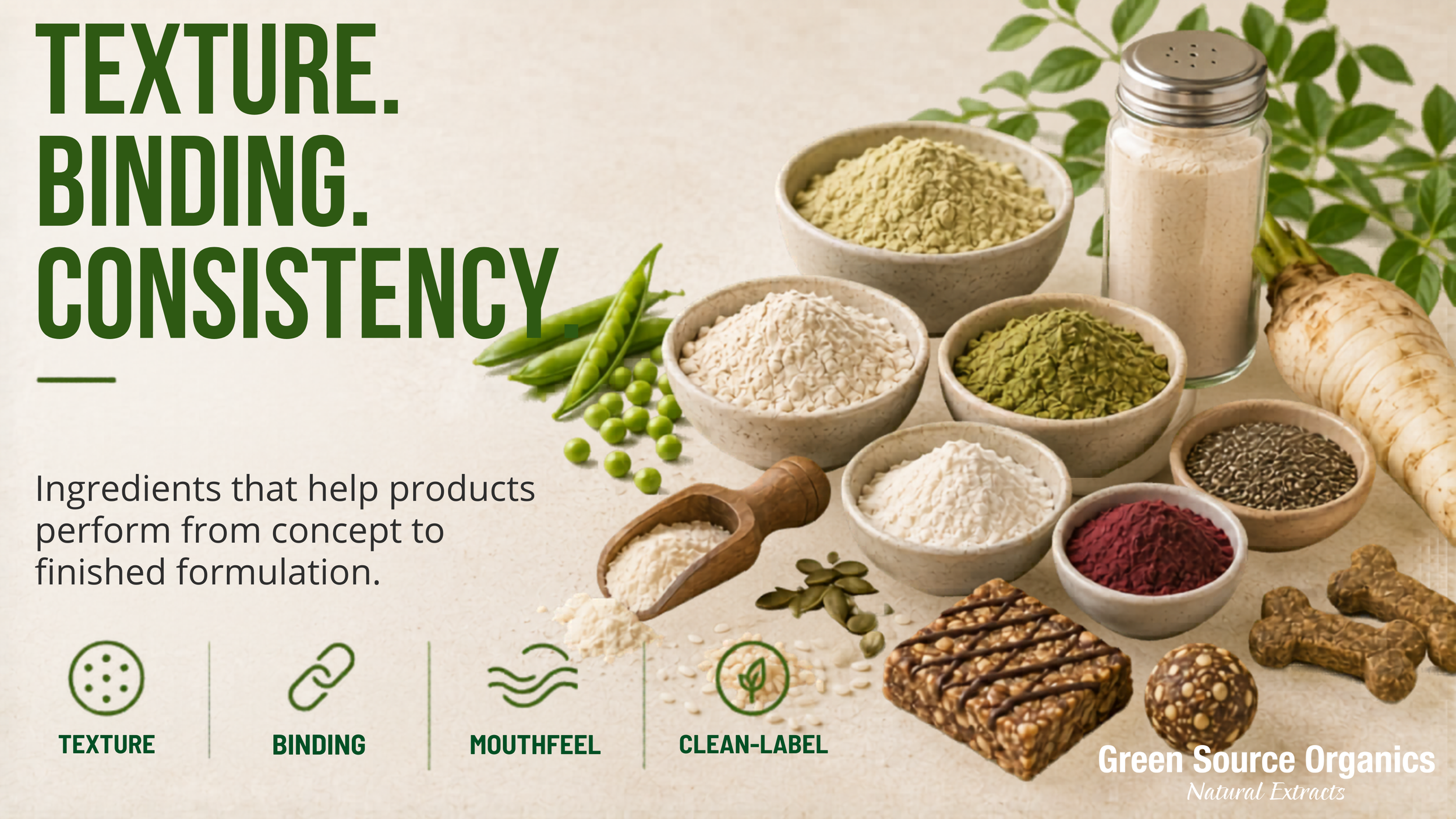
Ingredients that support structure, binding, texture, and mouthfeel can help create a more consistent product experience from development through production.
Fibers for Structure and Functionality
Fiber ingredients may help support texture, bulk, and formulation structure in a variety of applications. Inulin sources such as agave, chicory root, and Jerusalem artichoke are commonly used in product development where fiber content, mouthfeel, and clean-label positioning are important. In powdered blends, fibers may also contribute to product body and consumer-friendly ingredient statements. In food and pet applications, they can support texture and formulation balance.
Plant Proteins for Body and Product Identity
Plant-based proteins such as pea, rice, hemp seed, pumpkin seed, and sesame seed proteins may contribute body, density, and nutritional value. They are especially useful in products where protein positioning is part of the formula’s identity. In bars, powders, snacks, and pet nutrition products, plant proteins can help support both structure and nutritional appeal.
Fruit and Vegetable Powders for Texture, Flavor, and Visual Appeal
Fruit and vegetable powders may provide more than color and flavor. Depending on the ingredient and application, they can contribute body, texture, natural sweetness, acidity, or savory depth. Pumpkin, sweet potato, carrot, apple, banana, cranberry, and mango powders are examples of ingredients that may help formulators build more complete sensory profiles while maintaining clean-label appeal.
Pet Treats, Chews, and Toppers
Texture and binding are especially important in pet nutrition applications. Treats, chews, toppers, and supplements must balance palatability, structure, processing performance, and label appeal. Ingredients such as fibers, proteins, fruits, vegetables, and specialty nutritional ingredients can help manufacturers create products that are functional, appealing, and formulation-ready.
Sourcing for Consistency
When performance matters, consistency is critical. Manufacturers need ingredients that are supported by reliable sourcing, documentation, and traceability. Green Source Organics supplies bulk ingredients across key categories including fruits, vegetables, inulin, proteins, oils, and specialty nutritional ingredients. These ingredients can support a wide range of product development goals, from texture and binding to nutritional positioning and clean-label formulation.
Build Better Formulations from the Ingredient Up
Texture, binding, mouthfeel, and structure are not afterthoughts. They are central to product quality and consumer experience.